What to know about access problems for Kentish Town rubbish jobs
Posted on 13/06/2026
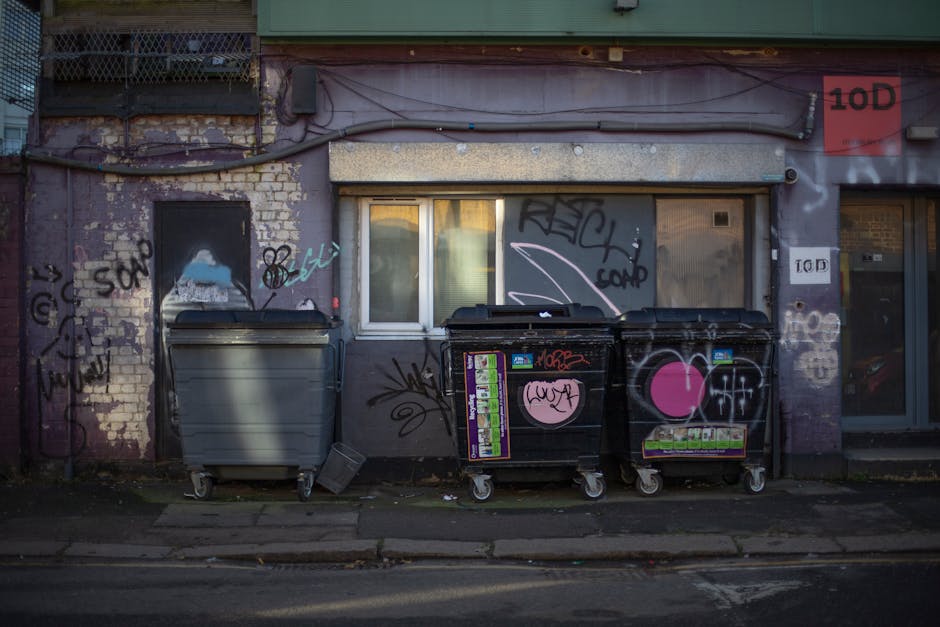
![Two green plastic wheelie bins with black lids are positioned side by side on a pavement near the edge of a road. The bins are made of textured, durable plastic with a slight curve on the lids, which are secured with black plastic clips. They are slightly weathered, with minor scuff marks visible on the surface. The bins are placed on a concrete and gravel area that shows some scattered debris, such as dried leaves and small stones, at their base. Behind the bins, there is a wide asphalt road with a slight curve, and across the street, a brick and plaster wall features a series of large advertisements or posters protected by glass, mounted on a building with architectural detailing, including arched windows and ornamental brickwork, indicating an urban setting. The lighting suggests a clear day with natural sunlight casting soft shadows, providing an everyday scene related to local waste collection and private rubbish disposal, which could be managed through services such as those offered by [COMPANY_NAME].](/pub/blogphoto/what-to-know-about-access-problems-for-kentish-town-rubbish-jobs1.jpg)
If you are planning a clearance in Kentish Town, the rubbish itself is often only half the story. The real challenge is access: narrow staircases, basement flats, awkward parking, shared entrances, locked gates, and the classic "where on earth do we unload this?" moment. This guide explains what to know about access problems for Kentish Town rubbish jobs, why they matter, and how to plan around them without stress. Whether you are clearing a flat near Kentish Town West, managing a builder's skip-free load, or dealing with bulky furniture in a top-floor maisonette, a little planning goes a long way.
Truth be told, most delays happen before a single bag is lifted. Once you understand the access picture, the job becomes smoother, quicker, and usually cheaper too. Let's get into the practical stuff.
Why access problems matter
Access sounds like a small detail until it slows the whole job down. In Kentish Town, many homes and commercial spaces are tucked into older buildings, converted terraces, mansion blocks, shopfronts, and mixed-use properties. That means rubbish removal teams may have to work around tight hallways, steep stairs, restricted loading bays, or a long walk from the property to the vehicle.
Why does that matter? Because access affects almost everything:
- the time needed to complete the job
- how many people are required on site
- the type of vehicle that can be used
- how much manual carrying is involved
- the risk of damage to walls, flooring, or communal areas
- the final quote, especially if extra labour is needed
A quick example: a second-floor flat with no lift may be straightforward if the waste is light and bagged, but it becomes much more demanding when there are wardrobes, broken appliances, or heavy renovation debris. A hallway that looks fine at first glance can suddenly feel very narrow once a sofa tries to turn the corner. Been there, seen that, a few times.
Planning for access also helps with neighbour relations. Nobody wants a van idling outside, a stairwell blocked for longer than expected, or bins left in the wrong place while everyone is trying to get on with their day. In a busy neighbourhood like Kentish Town, that social side matters more than people think.
For broader context on how different job types fit together, it can help to look at the wider services overview and the practical guidance in pricing and quotes.
How access problems affect a rubbish job
Access issues are not just about whether someone can get through the front door. They shape the whole workflow of the collection. A good crew will usually assess a few key points before the job starts, even if it is just a short phone call or photo check.
1. Route from the property to the vehicle
The shortest route is not always the best one. A rear alley may be closer, but if it is locked, poorly lit, or blocked by parked cars, the team may need to use the front entrance instead. That adds distance and time.
2. Property layout
Older Kentish Town buildings often have sharp corners, narrow landings, or split-level access. That matters for furniture removal, white goods, and bulky waste in particular. A washing machine is not very forgiving when the stairwell is tight.
3. Parking and loading
If the vehicle cannot stop close enough to the property, items may need to be carried further. Sometimes the issue is a lack of legal parking space; sometimes it is a short loading window; sometimes it is simply that another car is in the way. That extra distance can make a surprisingly big difference.
4. Shared or controlled access
Flats, estates, and managed buildings can involve door codes, concierge approval, lift booking, or timed access windows. If no one has the code, the job stalls. Simple as that.
5. Item type and weight
Large items need different handling. A bag of mixed household rubbish is one thing. A chest of drawers, broken bed frame, or building waste from a renovation is another matter entirely. This is why teams often ask what kind of waste is involved before confirming the visit.
For property-specific clearances, it may help to compare how access affects a house clearance in Kentish Town versus a quicker domestic waste collection.
Key benefits and practical advantages
Good access planning is not just about avoiding headaches. It gives you practical advantages that show up in real life.
- Faster turnaround: the team spends less time problem-solving on the doorstep.
- Cleaner removal: fewer dropped bags, scuffed walls, or awkward trips through communal spaces.
- Better value: less time on site often means a more efficient job overall.
- Less disruption: especially important in flats, managed blocks, and shared entrances.
- Safer lifting: clear access reduces the chance of strain or accident.
- More accurate quote: if access is explained early, the pricing is more likely to match the real job.
There is also a quiet but important benefit: everyone feels less rushed. When access is sorted in advance, nobody is standing in a doorway trying to make decisions while a mattress is halfway out. That tiny bit of calm can change the whole tone of the day.
If you want to understand how a reliable provider handles these practicalities, the pages on insurance and safety and waste carrier licence and compliance are worth a look.
Who this is for and when it makes sense
Access planning matters for almost everyone, but it is especially useful in a few common situations around Kentish Town.
Flat residents and tenants
If you live in a top-floor flat, basement apartment, or converted house, access can be the difference between a simple collection and a complicated one. Shared hallways and limited parking are the usual pain points.
Landlords and managing agents
Void clearances, end-of-tenancy rubbish, and communal area clear-ups often need coordination. A missed lift booking or unannounced visit can easily slow things down.
Homeowners clearing large items
Furniture removal is often straightforward until you reach the staircase. Sofas, wardrobes, beds, and old appliances can all need a proper route plan. For this kind of job, furniture removal in Kentish Town is the more relevant service to review.
Builders and renovators
Builders' waste is usually heavier, messier, and more time-sensitive. If scaffolding, skips, or narrow side access are in the mix, the whole sequence needs extra thought. That is where builders waste removal in Kentish Town becomes especially relevant.
Local businesses
Shops, cafes, offices, and hospitality venues often have limited rear access or short loading opportunities. For them, the issue is not just rubbish removal. It is keeping operations moving. If that sounds familiar, see commercial waste removal in Kentish Town.
There are also seasonal jobs where access takes on a different flavour. Garden waste, for example, can involve muddy paths, side gates, and a long haul through the house. Not glamorous, but very normal. The same goes for garden waste removal and white goods and appliance disposal.
Step-by-step guidance
If you are organising a clearance and want to avoid last-minute surprises, this is the part to follow. It is simple enough, but the details matter.
- Walk the route. Start at the property entrance and go the full path to where the vehicle would stop. Look for narrow turns, steps, low railings, locked doors, and anything that may catch on bulky items.
- Check the parking situation. Can a van reasonably stop close by? Is there a loading bay, resident permit area, or time-restricted space? If the answer is "sort of", then tell the provider that, not a polished version of it.
- Measure larger items. A quick tape measure can save a lot of grief. Door widths, stair widths, landing space, and the size of the item itself are all worth noting.
- List anything fragile or awkward. Glass-fronted furniture, old mirrors, broken appliances, or bagged waste with sharp edges need extra care.
- Flag building rules early. If there is a concierge, lift booking, timed access, or courtyard entry procedure, mention it before the job day.
- Share photos if possible. Pictures of the stairs, hallway, entrance, and waste pile are often enough for a realistic assessment. It is one of the easiest ways to avoid surprises.
- Confirm the waste type. Mixed household rubbish, furniture, builders' waste, garden waste, and appliance disposal may all be handled differently.
- Agree the plan. Make sure everyone knows the access route, the arrival time, and what happens if the vehicle cannot park directly outside.
Once that is done, the job becomes much more predictable. And honestly, predictable is good when you are moving old junk down three flights of stairs.
Expert tips for better results
There are a few things experienced crews tend to do almost automatically. These small habits save time and reduce the chance of awkward moments.
Be specific, not vague
"There's decent access" does not tell anyone much. "There's a narrow hallway, one flight of stairs, and parking is about 30 metres away" is useful. Specific beats optimistic every time.
Plan for the awkward item first
If a sofa, wardrobe, or fridge can make it out, the smaller waste bags usually follow. If the biggest item cannot move cleanly, the rest of the job may need a different approach.
Think about the return route
Teams often focus on getting in, but getting out can be the trickier part, especially if bins, neighbours, or parked cars have appeared in the meantime. Kentish Town can change in a heartbeat on a busy morning.
Keep communal areas clear
A quick sweep of hallway clutter, doormats, and loose boxes can prevent trips and improve speed. It sounds minor. It isn't, really.
Ask about timing windows
Same-day jobs can work well, but access issues tend to cause the biggest delays when schedules are tight. If you are under time pressure, check out the practical advice on same-day rubbish clearance delays and solutions in NW5.
Use local knowledge
Local roads, station traffic, school runs, and event spillover can all affect access. A route that looks fine on paper may be a different story at 8:30 in the morning. If you want more local context, the article on rubbish removal near Kentish Town West Station NW5 is a useful read.
One more small point: if you are unsure, say so. A good provider would rather hear "I'm not sure if the lift is working" than find out after arrival. Saves everyone a bit of faff.
![Two green plastic wheelie bins with black lids are positioned side by side on a pavement near the edge of a road. The bins are made of textured, durable plastic with a slight curve on the lids, which are secured with black plastic clips. They are slightly weathered, with minor scuff marks visible on the surface. The bins are placed on a concrete and gravel area that shows some scattered debris, such as dried leaves and small stones, at their base. Behind the bins, there is a wide asphalt road with a slight curve, and across the street, a brick and plaster wall features a series of large advertisements or posters protected by glass, mounted on a building with architectural detailing, including arched windows and ornamental brickwork, indicating an urban setting. The lighting suggests a clear day with natural sunlight casting soft shadows, providing an everyday scene related to local waste collection and private rubbish disposal, which could be managed through services such as those offered by [COMPANY_NAME].](/pub/blogphoto/what-to-know-about-access-problems-for-kentish-town-rubbish-jobs3.jpg)
Common mistakes to avoid
Most access problems are avoidable, or at least manageable. The trouble comes when people assume they will sort themselves out on the day. They usually do not.
- Underestimating the distance: a short walk from the van sounds harmless until it is repeated twenty times with heavy bags.
- Forgetting stairs or lifts: "It's only three floors" is often said with a bit too much confidence.
- Not mentioning parking restrictions: if the team cannot stop legally, everything slows down.
- Ignoring building rules: some properties have strict access procedures, and they matter.
- Leaving items in multiple rooms: waste scattered throughout a flat or office creates more carrying and more confusion.
- Assuming every item can be moved the same way: a wardrobe and a bin bag are not the same job. Obvious, but easy to forget in the rush.
- Booking too tightly: if you need clearance between meetings, the access margin should be generous, not optimistic.
A common one is people saying, "We'll just have the neighbours move their car." Nice idea. Not really a plan.
Tools, resources and recommendations
You do not need fancy equipment to sort access. A few straightforward tools and habits usually do the trick.
- Tape measure: for door frames, stair widths, and bulky items.
- Phone camera: for photos of entrances, stairs, lifts, and waste piles.
- Notebook or notes app: for recording codes, time windows, and parking details.
- Building instructions: useful for concierge-managed properties, lift bookings, or access codes.
- Basic item list: helps distinguish between simple bagged rubbish and heavier objects.
If you want to compare services more broadly, start with the company's about us page and then review how they explain safety coverage and payment and security. Those pages often tell you a lot about how a team handles real-world jobs, not just the nice easy ones.
For environmental handling and end disposal, the page on recycling and sustainability is useful too, especially if your access issue is tied to a mixed load that includes reusable materials.
Law, compliance and best practice
Access problems are practical issues, but they also intersect with compliance and safety. In the UK, rubbish should be handled by a legitimate waste carrier, and the job should be carried out in a way that avoids unsafe lifting, blocked exits, or unnecessary damage to property. That is standard best practice, even if the job is only a few bags and an old armchair.
For households and landlords, the sensible approach is to keep clear records of what was removed and who removed it. For businesses, that becomes even more important, because waste handling can touch on duty-of-care expectations and internal compliance procedures. There is no need to make it complicated. Just keep things clear, honest, and documented.
When access is poor, the safety side matters more, not less. Narrow stairs, poor lighting, slippery outdoor paths, and awkward lifting angles all increase risk. Good teams will often slow down rather than rush. That may feel less dramatic, but it is usually the right call.
For policy and legal background on the company side, you can review the relevant pages on terms and conditions, privacy policy, and accessibility statement. These are useful trust markers when you are deciding who to book.
Options, methods, or comparison table
Different access situations call for different approaches. Here is a simple comparison to help you think it through.
| Access situation | Typical challenge | Best approach | What to tell the provider |
|---|---|---|---|
| Ground-floor flat with rear lane access | Locked gate, narrow lane, limited parking | Plan a short carry route and confirm vehicle position | Gate access, lane width, parking restrictions |
| Top-floor conversion with stairs only | Heavy lifting, turns on landings | Use extra labour and clear staircase route | Number of flights, stair width, item size |
| Managed block with lift | Lift booking, communal rules | Reserve lift time and protect shared areas | Lift size, booking rules, concierge contact |
| Busy roadside property | No easy stopping point | Arrange timed loading and realistic arrival window | Parking limits, traffic pinch points, access windows |
| Builders' waste from renovation | Heavy, dusty, bulky material | Stage waste near exit and keep route clear | Waste type, volume, stair access, loading distance |
As a rule of thumb, the more uncertain the access, the more important it is to provide photos and measurements. That one habit prevents a lot of back-and-forth.
Case study or real-world example
Here is a realistic example from a typical Kentish Town job. A resident in a converted flat wanted to clear an old sofa, two wardrobes, a broken chest freezer, and six bags of mixed rubbish. On paper, it looked straightforward. The catch? The flat was on the third floor, the stairwell had a tight turn halfway down, and parking was limited to a short bay outside the building.
Before the job, the resident sent a few photos of the stairwell and measured the hallway. That changed the plan. Instead of turning up with a minimal crew and hoping for the best, the team brought enough labour to manage the bulky items safely, parked as close as the road allowed, and cleared a route through the shared hallway first.
The result was simple: less stop-start movement, fewer risks, and no awkward debate about whether the freezer could be dragged around a corner it clearly did not want to take. The resident was relieved, and so were the neighbours.
What made the biggest difference? Not brute force. Communication. A bit of honesty before the appointment turned a potentially clumsy job into a tidy one.
Practical checklist
Use this before booking or on the day of the job.
- Confirm the property type and floor level
- Check whether there is a lift and whether it works
- Measure the main doorway and any tight corners
- Note stairs, landings, and awkward turns
- Find out where the vehicle can legally stop
- Check for loading bays, permit areas, or time limits
- Ask about gate codes, concierge rules, or entry instructions
- Gather photos of the access route and the waste itself
- Separate bulky items from smaller bagged rubbish
- Tell the provider about fragile or heavy objects
- Keep communal routes clear on the day
- Allow extra time if access is uncertain
If you have all that ready, you are in much better shape. Not perfect, maybe, but close enough for a smooth job.
Conclusion
Access problems are one of the most common reasons a rubbish job in Kentish Town runs slower than expected, but they are also one of the easiest issues to prepare for. A few measurements, a couple of photos, and honest details about parking or stairs can make the difference between a stressful collection and a tidy, well-run one.
In practice, the best jobs are the ones where everyone knows the route before the first item is moved. That means fewer delays, fewer surprises, and far less faff in shared spaces. Whether you are clearing a flat, a house, an office, or a renovation load, it pays to think about access early. Honestly, it's one of those small things that has a big ripple effect.
Get a free quote today and see how much you can save.


